Get promoted · Get noticed
What to say in your 1:1 with your manager
Bring 3 things to every 1:1, most important first: what moved since last time, a decision or help you need, and any problem with the fix you recommend. Once a quarter, use one to check where you stand against the next level and what would show the rest.
What should you bring to every 1:1?
Your manager has several of these a week, and plenty get cut short. Write a short list before you go in, with the item that matters most at the top.
- What moved since last time. Results, not activity, and who helped: the vendor contract signed under budget, with legal turning the contract around in a day. Giving credit costs you nothing and shows your manager how the work really got done.
- A decision or help you need. Say what it is, by when, and what happens if it waits. A clear ask gets a clear answer; a vague one gets “let me think about it.”
- A problem, with the fix you’d recommend. Your manager can agree in a minute instead of solving it for you.
If nothing moved and you need nothing, a shorter meeting is fine. Don’t fill the time.
What should you cover once a quarter?
Every few months, give one 1:1 to the longer view. Tell your manager ahead of time, so they come ready for it.
- Where you stand against the next level. Part by part, against what your manager said it takes.
- What isn’t shown yet. Name the gaps yourself, before anyone else does.
- The next piece of work that would show it. Something specific: running the quarterly forecast, presenting results to the leadership team, owning the onboarding process end to end.
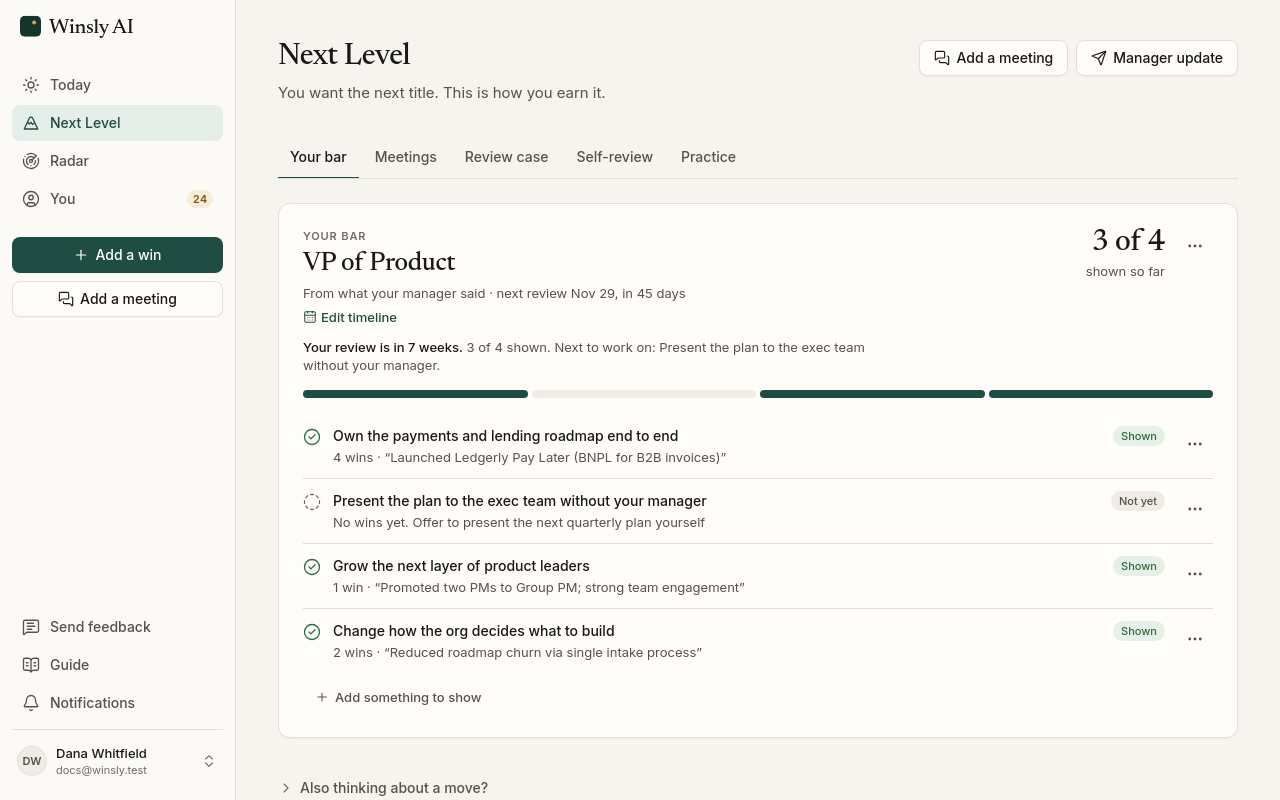
This only works if the bar is written down. If it isn’t, that’s the first conversation to have: what it takes to get promoted. A quarterly check means nothing at review time comes as a surprise, to either of you.
What topics are worth raising with your manager?
Beyond updates, a few topics are worth bringing up now and then. They’re subjects to open, not lines to recite, so ask in your own words.
- What they’d need to see from you. Not in general, but over the next few months. The answer tells you which work to go after.
- What’s on their plate you could take. A report they still build, a meeting they still run, a supplier they still manage. It frees their time and lets them see you doing work from the level above.
- How your work is landing with their boss. Your manager hears things you don’t. Find out what their manager has noticed, and what they’d want to see more of.
- What’s changing. Priorities, budgets, reorganizations. Hearing early gives you time to adjust your plans instead of reacting late.
- How they like to hear from you. A written note before the meeting, or the headline in it.
What should you avoid in a 1:1?
- Reading out a status report. If it could be a written update, send it before the meeting and use the time for what needs a conversation. A short weekly note does most of this work; see how to get your work noticed.
- Surprises. Bad news is easier to handle early. If a deadline is slipping, your manager should hear it from you, before they hear it from anyone else.
- A problem without a recommendation. It hands your manager more work. Bring the options you considered and the one you’d pick.
- Venting. Frustration is real, and a good manager will hear it once. A 1:1 spent on it doesn’t move anything. Name what’s wrong, then what you’d change.
How do you bring up a promotion in a 1:1?
Don’t spring it at the end of a meeting about something else. Ask for a 1:1 set aside for it, and say what it’s for, so your manager can come prepared.
Start from what your manager said the next level takes, in their words. Bring the wins that show each part, and name what isn’t shown yet. If you can show most of the bar, it’s a conversation about the level. If you can’t yet, it’s a conversation about the work that would close the gap. Either way, leave knowing what happens next. How to ask for a promotion covers that conversation in full.
In Winsly
Manager update drafts a short note to your manager from your recent wins, one line per win you choose, so the status report goes out before the meeting and the 1:1 is free for the rest. You send it yourself. Next Level shows how much of your bar is shown and what isn’t yet: the quarterly conversation on one screen. Your wins log · Next Level and your review case.