Get promoted · If it doesn’t happen
Promotion or a new job? How to decide
Wait for the promotion if the next level is defined, within 1 or 2 cycles, and your manager argues for you. Start looking if nobody can say what it takes, the bar moves every time, or there’s no room above you. Either way, keep your record current.
When is it worth waiting for a promotion?
Signs to stay:
- The next level is defined. Your manager can say what it takes, in terms you can check, and you could show most of it within 1 or 2 cycles. If you haven’t asked yet, start there.
- You’re still learning. The work still stretches you, and you’re getting better at things the next level needs.
- Your manager argues for you. They’ve put your name forward before, or told you plainly what they’d need to see to do it.
- The gap is closing. Each quarter, more of the bar is shown than the quarter before.
Even then, set a checkpoint. If a full cycle passes and you’re no closer, look at the question again.
When is it time to look elsewhere?
Signs to look:
- Nobody can say what it takes. You’ve asked more than once, and the answer stays vague.
- The work has stopped stretching you. You could do this year’s job half asleep, and nothing bigger is on offer.
- The bar moves every time. You show what was asked, and the ask changes.
- There’s no room above you. The role you’d move into is filled, nobody is leaving it, and the team isn’t growing.
One of these on its own may be a hard year. Several that last are usually a pattern. If you were just passed over for promotion, find out why before you decide: the answer often settles the question.
Does a new job pay more than an internal promotion?
Often, but not always. Moving tends to bring a bigger jump in pay than an internal promotion, because a new employer prices the role fresh, while an internal raise is usually set within the range for your level. And a bigger number can come with a smaller role, or less room to grow.
Pay isn’t the whole trade, though. A new place resets the trust you’ve built. You leave behind the people who know your work, who’d hand you the hard project and argue for you in the room. At a new company you earn that again, and the first year often goes to proving yourself.
So compare the whole picture, not just the salary:
| What you weigh | Promotion where you are | New job elsewhere |
|---|---|---|
| Pay | Usually a set step within the company’s ranges | Often a bigger jump, priced fresh |
| Trust | Already built, with people who know your work | Starts over |
| Timing | Tied to the review cycle | Tied to the search and the offer |
| Next step up | Depends on room above you | Depends on the new team’s plans |
Can you keep both options open?
Yes, and it’s often the sensible thing to do while you decide.
- Keep your record current either way. Log your wins as they happen. You’ll want them whether you ask for the level or apply somewhere else.
- Keep the search private. Watching a few companies you’d want to work for, and the roles they open, commits you to nothing and doesn’t need announcing.
- Use the same proof for both. A promotion case and a strong application rest on the same thing: dated results, in the business’s terms.
- Keep doing the work well. A quiet quarter while you look hurts both paths.
Pick a point to decide, such as after the next review, so the question doesn’t drag on for a year.
In Winsly
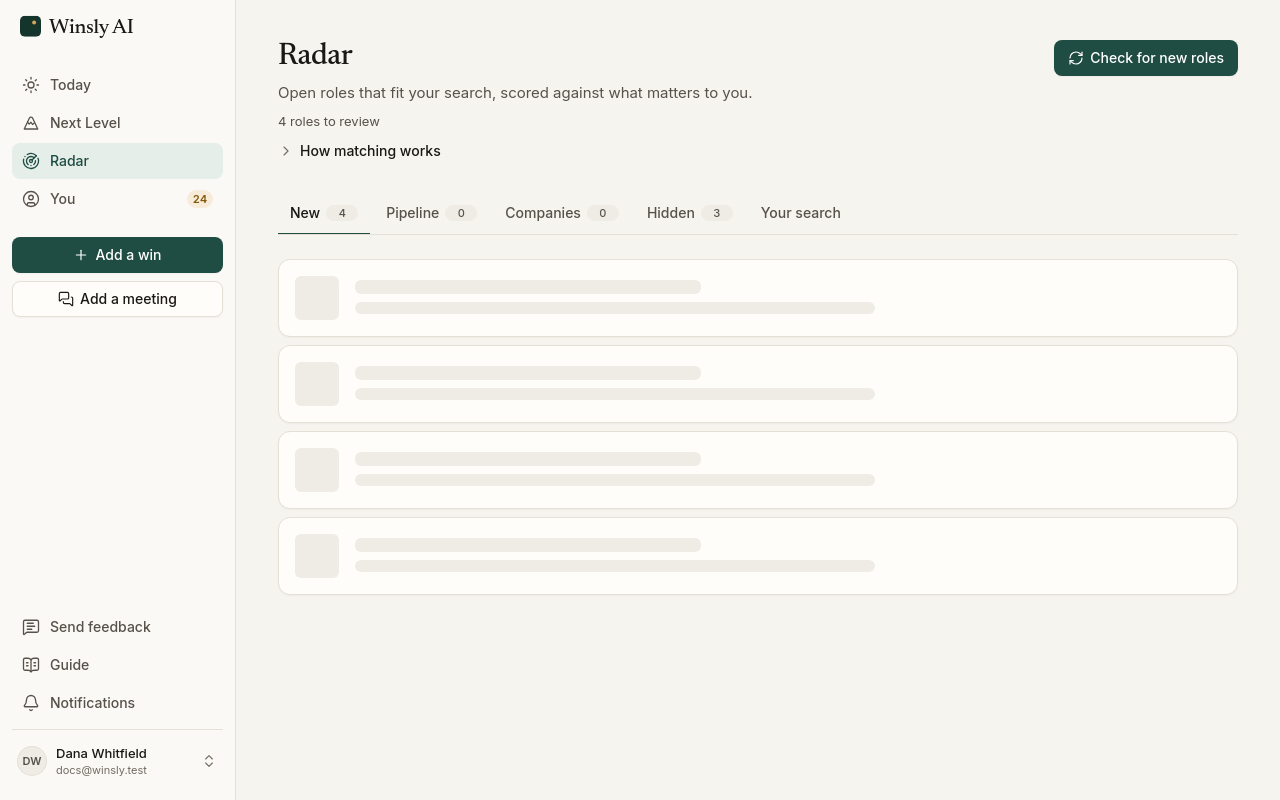
Next Level shows how much of your bar is shown and what isn’t yet, so “is it within reach” has an answer. Radar watches the companies you choose and scores new roles against what you want; your search stays private, and setting it up never changes your Next Level bar. When a role is worth it, tailored applications cite a win for every claim. Next Level and your review case · Radar.