Get promoted · Get noticed
Executive presence, made checkable
Executive presence is how you come across when the stakes go up: calm, clear and in charge of yourself. It isn’t charisma. You can build it by checking three things every time it matters: you answer first, you keep it short, and you back it with your record.
What is executive presence, really?
It isn’t charisma, or how you sound on a stage. It’s how you behave when a decision matters, emotions surface and people are watching.
It’s also the phrase managers most often use for a bar nobody has defined. So the first job is to turn it into something you could show with a piece of work (what it takes to get promoted). The second is to practice it.
What can you check yourself on?
| Sounds like | Watch for | |
|---|---|---|
| Answer first | The first sentence is the point: the ask, the recommendation, the decision needed | Starting with background; the ask arrives last, or never |
| Keep it short | One point at a time; a spoken answer under a minute | Repeating the point, several asks at once |
| Back it with your record | Real outcomes and numbers from your own work, in the business’s terms | Adjectives instead of results; effort instead of outcomes |
These three are where most people lose the room, and they’re the easiest to check after any meeting: did my point come first, did I stop, and did I give a result rather than an adjective?
How do you stay composed when the stakes go up?
Under pressure most people talk faster and explain more. Do the opposite: say less, pause, and let a short silence work. You can always add a sentence; you can never take one back.
How do you practice it on your own?
- Write the first sentence first. Before a meeting that matters, write down the one sentence you’d say if you only got one.
- Say it out loud and time it. If an answer runs past a minute, cut until it doesn’t.
- Bring one number. Pick the result from your own work that makes the point, and check it’s right.
- Ask for a read afterward. Someone you trust can tell you whether your point landed in the first sentence.
How will you know it’s working?
People stop interrupting you. Decisions speed up after you speak. Others start using your framing. Leaders ask what you think without being prompted. And your 1:1s with your manager get shorter and more useful.
In Winsly
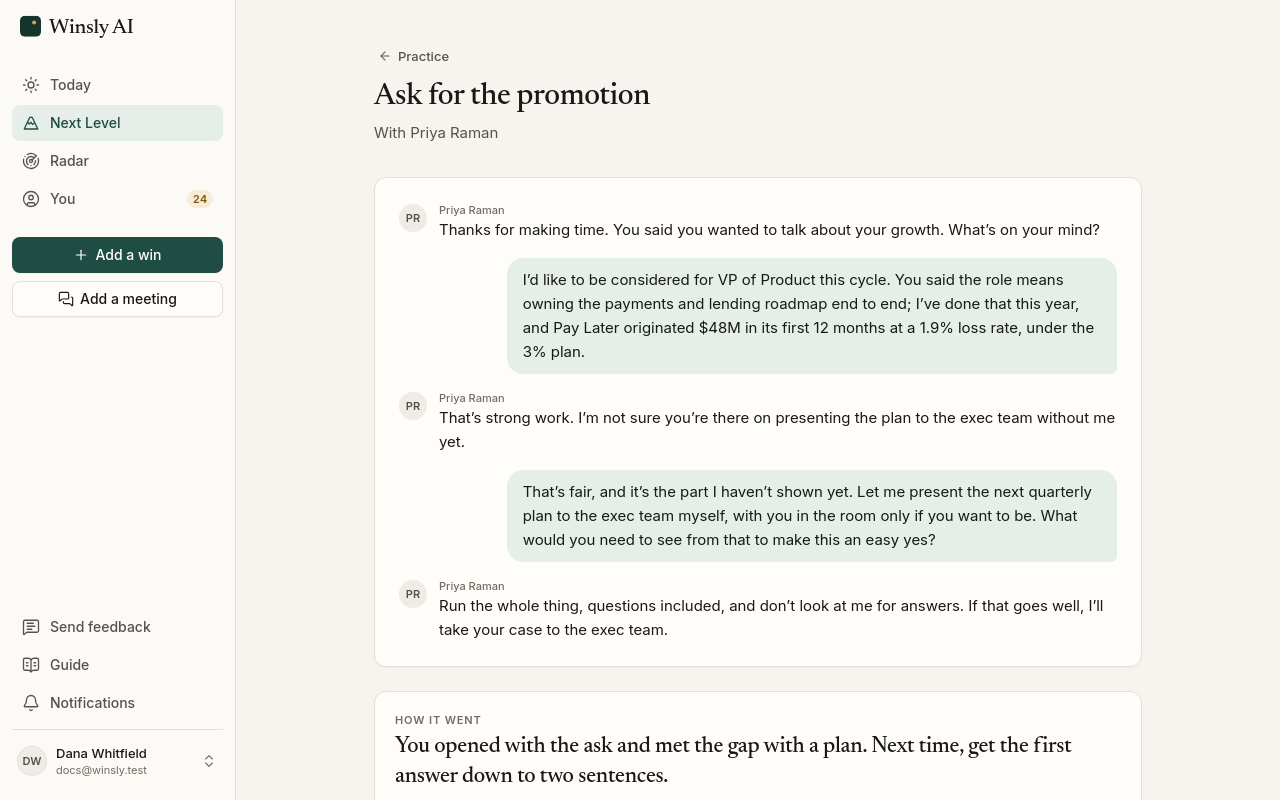
On the Advisor plan, Practice lets you rehearse the conversations that decide a promotion against someone who pushes back the way a busy manager would, and scores how you did. Afterward you see a line of yours rewritten the way it could sound. Next Level and your review case.